Download PDF The Upanishads (Penguin Classics), by Juan Mascaro
Concerning this publication, everybody recognizes that it's actually fascinating publication. You might have sought for this book in lots of stores. Have you got it? When you are run out of this publication to acquire, you can get it here. You know, getting The Upanishads (Penguin Classics), By Juan Mascaro in this internet site will be much easier. No have to opt for shopping in publication shops, walking from one store to others, this is the internet that has listings al book collections in the world, primarily. The web links are supplied for each book.
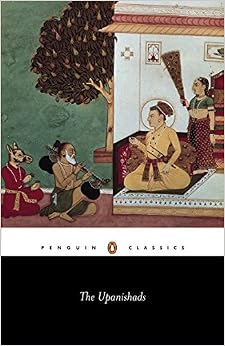
The Upanishads (Penguin Classics), by Juan Mascaro

Download PDF The Upanishads (Penguin Classics), by Juan Mascaro
After few time, lastly the book that we as well as you wait on is coming. So eased to obtain this fantastic publication readily available to present in this site. This is guide, the DDD. If you still feel so hard to obtain the published publication in the book store, you could accompany us once again. If you have actually ever got the book in soft data from this book, you could easily get it as the reference currently.
There is no doubt that book The Upanishads (Penguin Classics), By Juan Mascaro will consistently offer you motivations. Even this is simply a publication The Upanishads (Penguin Classics), By Juan Mascaro; you can find several styles and also kinds of books. From captivating to experience to politic, as well as sciences are all given. As what we explain, here we provide those all, from popular authors as well as publisher on the planet. This The Upanishads (Penguin Classics), By Juan Mascaro is among the collections. Are you interested? Take it currently. How is the way? Learn more this post!
One that makes this book is strongly reviewed by amounts people is that it provides a different method to utter the significance of this book for the visitor. Easy to review and easy to understand become one component characters that people will take into consideration in picking a publication. So, it is really appropriate to think about The Upanishads (Penguin Classics), By Juan Mascaro as your analysis product.
In order to ease you to get this book to check out, we provide the soft documents types, it will let you constantly obtain guide. When the store or library is out of guides, this website will certainly not run out of guide supplies. So, you will always discover, whenever you are here as well as going to get it. Simply discover this book title of The Upanishads (Penguin Classics), By Juan Mascaro as in the browsing box. It will certainly aid you to relieve discover the web link that is offered.
The Upanishads, the earliest of which were composed in Sanskrit between 800 and 400 bce by sages and poets, form part of the Vedas - the sacred and ancient scriptures that are the basis of the Hindu religion. Each Upanishad, or lesson, takes up a theme ranging from the attainment of spiritual bliss to karma and rebirth, and collectively they are meditations on life, death and immortality. The essence of their teachings is that truth can by reached by faith rather than by thought, and that the spirit of God is within each of us - we need not fear death as we carry within us the promise of eternal life.For more than seventy years, Penguin has been the leading publisher of classic literature in the English-speaking world. With more than 1,700 titles, Penguin Classics represents a global bookshelf of the best works throughout history and across genres and disciplines. Readers trust the series to provide authoritative texts enhanced by introductions and notes by distinguished scholars and contemporary authors, as well as up-to-date translations by award-winning translators.
Your recently viewed items and featured recommendations
›
View or edit your browsing history
After viewing product detail pages, look here to find an easy way to navigate back to pages you are interested in.
Product details
Series: Penguin Classics
Paperback: 144 pages
Publisher: Penguin Classics; Later Printing edition (November 30, 1965)
Language: English
ISBN-10: 0140441638
ISBN-13: 978-0140441635
Product Dimensions:
5.1 x 0.3 x 7.8 inches
Shipping Weight: 3.2 ounces (View shipping rates and policies)
Average Customer Review:
4.5 out of 5 stars
96 customer reviews
Amazon Best Sellers Rank:
#93,117 in Books (See Top 100 in Books)
I bought this version, then the versions of Gambhirananda and Nikhilinanda. Compare Isa Upanisad 3:Katz & Egenes:Sunless are those worlds calledcovered in blinding darkness;there, after departing, go those menwho are slayers of the Self.It has a footnote saying this verse translated by Mahesh Yogi, their guru.here is Gambhirananda:Those worlds of devils are covered by blinding darkness, Those people that kill the Self go to them after giving up this body.and Nikhilanada:Verily, those worlds of the asuras are enveloped in blind darkness; and thereto they all repair after death who are slayers of Atman.Both of the swamis include Sankaracharya's commentary. The only commentary offered by Katz is that the translation by Mahesh Yogi. Without the commentary it is hard to make sense of the verse, even with multiple readings. Both of the swamis offer some introduction to the Sanskrit words in the verse. This is where the Katz version begins to look like a waste of money. The Sanskrit has the word "asura" in it, which means demon. G. translates it properly, and N. just uses the Sanskrit word, with commentary beneath explaining the word. The connotation of that word should not be avoided, as one loses an important meaning of the passage.Here is Easwaran:Those who deny the Self are born againBlind to the Self, enveloped in darkness,Utterly devoid of love for the LordEaswaran at least has notes. Mascaro and Easwaran get the feel for the passage, but Katz is so slick the meaning is very hard to access.Since the Upanishads are for study, get something where you can get a sense of the original words of the passage. Easwaran and Mascaro i would avoid too because of loose use of the word "Lord" for example. That word tell you nothing, because in Sanskrit there are many words that can be translated by that one English word, and they all have different connotations. In this case translating Atman as "Lord" is close to being irresponsible. Better to have left it alone, or to follow the more standard translation "Self" (with a capital s). Both G and N have Sankaracharya's commentary, which is very authoritative. You will not be able to read the text straight through easily, but both have some summary information about the Upanishad, so you will be able to have a grasp of the whole thing as you read the parts. This is more complicated though with longer Upanishad, although those are broken up into various parts.
This is the most profound translation of the Upanishads that I have ever read. Besides being fun to read and true to the original, the translators clearly have the experiences that are being discussed in the Upanishads. When a translation comes from direct experience, as this does, I notice that some quality of that experience comes to the reader. For example, the conversation in the Katha Upanishad and Death are good to read for anyone who is experiencing a loss of a family member or facing a serious illness--well presented, beautifully phrased, and profoundly enlightening. I hope that Profs. Vernon Katz and Thomas Egenes translate more of the Vedic literature soon.
Juan Mascaro's selections of the Upanishads are an intriguing glimpse into Hindu scripture and represent "the end" of the ancient Vedas and by extension the end of all knowing and seeking. The selections have various modes of presentation but one unifying message and theme: seeking to know the knower, to see the light of Truth, to go beyond the cycle of life and death.These diverse writings distill the multitude of cosmology into but a few lines; they fearlessly ask and answer the most daunting questions mankind has thought to ask, in but a few pages; in line with so many enduring texts they emphasize letting go of desire and achieving self-control. These selections are brief in terms of pages but longer than most in terms of meaning and value. If you get through this book in a matter of days, you didn't really read it, you didn't pay attention, you didn't respect the wisdom or give it its due.I am not overstating when I say that aside from the great value of these selections, Juan Mascaro's introduction would have been worth the cost on its own. As with the Dhammapada he shows a deep appreciation for the source material and an equally strong desire to retain its poetry and potency while bringing these ancient works to modern readers in a fluid, impactful style. It is truly a shame that Mascaro was not a translator of more ancient works, but his three translations for Penguin Classics are perhaps more than anyone could ask for and will certainly remain among my most cherished books
I first bought the Kindle version and began reading, and felt it was necessary to then purchase a paperback version in order to continue.The problem with the Kindle version is that it was released with wonky fonts not aligning (the transliteration font is too far above the baseline). This is very distracting. I feel that the Kindle version should be immediately corrected and re-released, with a free upgrade for purchasers of the first release.Meanwhile, I now additionally own the paperback version and am happily continuing to dive deep into this superb translation of the Upanishads!
The Upanishads (Penguin Classics), by Juan Mascaro PDF
The Upanishads (Penguin Classics), by Juan Mascaro EPub
The Upanishads (Penguin Classics), by Juan Mascaro Doc
The Upanishads (Penguin Classics), by Juan Mascaro iBooks
The Upanishads (Penguin Classics), by Juan Mascaro rtf
The Upanishads (Penguin Classics), by Juan Mascaro Mobipocket
The Upanishads (Penguin Classics), by Juan Mascaro Kindle